The right number of custom scrubs comes from your roster, not a rule of thumb: count shifts between laundry days for each role, add a small shelf of unnamed spares in your most common sizes, and stage reorders for new hires. Custom Scrubs Co. accepts orders from a minimum of 12 pieces, so even a small clinic can plan this way.
- Minimum order is 12 pieces, mixed across tops, pants and jackets
- Free mockup within 24 hours, unlimited free revisions
- Standard turnaround about 2 weeks, faster with express shipping
- Named pieces and unnamed spares can sit in the same order
- Pay nothing until you approve the design
How many scrub sets does each staff member actually need?
Each staff member needs enough custom scrubs to cover every shift between laundry days, plus one extra set for spills, late laundry or a double shift. That is the whole formula. A nurse who works long consecutive shifts and washes once a week needs more sets than a front-desk coordinator who works shorter days and launders at home every evening.
Start with how your team really washes scrubs. If the practice uses a laundry service with a fixed pickup day, count the shifts between pickups. If staff wash their own scrubs, ask them how often they run a load, and plan for the busiest week of the month rather than an average one.
Then look at how dirty the work gets. Clinical roles that deal with fluids, animals or procedures often change mid-shift, so their count should include a backup set kept at the practice. Administrative roles rarely need that backup. Planning per role, rather than one number for everyone, is what keeps scrubs from running short in one area while sitting unused in another.
How do you turn a staff roster into a custom scrubs order?
Turning a roster into an order is a short, repeatable process. Work through it in a spreadsheet once and you can reuse it for every reorder with Custom Scrubs Co.
- List every person by role. Group clinical staff, providers, front desk and support so each group can get its own style and color.
- Choose styles per role. Decide who wears a scrub top with matching pants, who prefers jogger scrub pants, and who needs a lab-coat style scrub jacket on top.
- Set sets per person. Apply the laundry-cycle count from the section above to each role.
- Collect sizes and fits. Record women’s fit or men’s fit and a size for tops and pants separately, since many people wear different sizes on each.
- Add spares. Put a few unnamed pieces in your most common sizes on the order.
- Total by style, color and size. That table is exactly what the quote form needs.
The result is a single order that dresses the whole team at once, with one mockup and one approval for the logo.
Should every role get the same mix of tops, pants and jackets?
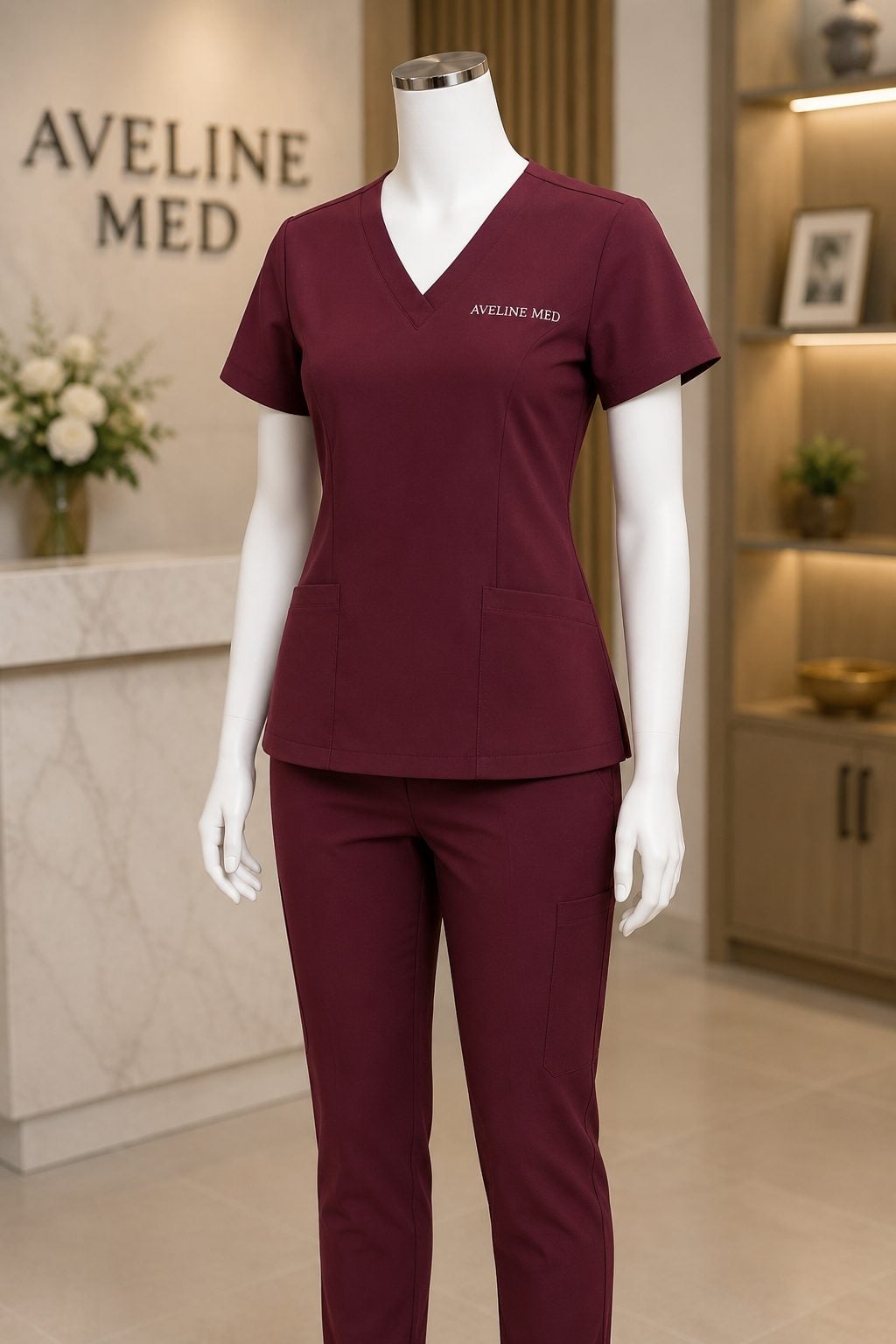
No. Different roles wear out different pieces, so the mix of scrub tops, pants and jackets should change by role. Tops carry the embroidered logo and get noticed by patients, so most practices order more tops than pants. Jackets are layered over scrubs and washed less often, so fewer are needed per person.
| Role | What to emphasize | Why |
|---|---|---|
| Clinical assistants and techs | Extra tops and pants, plus a backup set at work | Most likely to change mid-shift |
| Nurses and hygienists | Matching sets, extra tops | Long shifts and frequent washing |
| Providers | Scrub sets plus a lab-coat style jacket | Jacket signals role and covers scrubs between rooms |
| Front desk and admin | Tops in a distinct color, fewer pants | Light wear, high patient visibility |
| Support and sterilization | Durable sets, jogger pants if preferred | Active, physical work |
A complete scrub pant set is the simplest choice for roles that need matching tops and bottoms. For teams that want a tailored silhouette, the women’s fit scrub set and men’s fit scrub set let each person pick the cut that fits, inside the same order.
How many spare custom scrubs should a practice keep on the shelf?
Keep enough spare custom scrubs to dress a new hire on their first day and to replace a ruined top the same afternoon. In practice that means a small stock of unnamed tops and pants in the sizes your team orders most, in each role color you use.
Spares solve problems that otherwise cost time. A new medical assistant can start in branded scrubs instead of borrowed ones. A tech whose top is stained mid-shift changes into a matching piece. A temporary or float staff member looks like part of the team.
Keep spares unnamed. Names and titles tie a piece to one person, while a blank logo-only top can go to anyone. Store spares folded by size in a labeled bin so whoever manages supplies can see what is left. When the bin runs low on a size, that is your signal to add it to the next reorder rather than placing a rushed order for a single piece.
How does the 12-piece minimum shape quantity planning for small teams?
The minimum order at Custom Scrubs Co. is 12 pieces, and those pieces can be mixed across styles, colors and sizes. For a small practice, that makes the minimum easy to reach with one round of sets for a few people plus spares.
Count every garment toward the total: a top is a piece, a pair of pants is a piece, and a jacket is a piece. A small team ordering matching tops and pants reaches the minimum quickly, and adding a jacket for each provider or a couple of spare tops fills any gap.
Small teams benefit from ordering a little ahead rather than at the bare minimum. Every reorder needs its own production run, so planning a slightly fuller first order means fewer small reorders during the year and less chance that a new hire waits for scrubs.
When should a practice stage reorders instead of ordering everything at once?
Stage reorders when your headcount is changing, when you are unsure of sizes for future hires, or when you want to test a new style before committing the whole team. Ordering everything at once makes sense when the roster is stable and everyone’s sizes are confirmed.
A staged plan usually looks like this: a first order that dresses the current team and fills the spares bin, then smaller reorders for new hires, replacement pieces and any style change. Because your approved logo and embroidery setup stay on file, each reorder can match the earlier batch.
- Stable team: one full order, then periodic top-ups of spares.
- Growing team: a first order for current staff, then reorders as hires are confirmed.
- New style trial: a smaller order in the new style, then a full rollout once staff approve the fit.
Standard turnaround is about 2 weeks, with faster delivery available through express shipping, so plan each reorder far enough ahead that new hires are not waiting.
How do names and titles change the number of scrubs you order?
Names and titles turn shared stock into personal stock, so they raise the number of scrubs you need. A logo-only top can be handed to anyone. A top embroidered with a name and credential belongs to one person and cannot be reused if they leave or change roles.
The practical approach is to split the order. Give each staff member their named sets, then keep the spares bin logo-only. That way personalization helps patients recognize who is caring for them, while the practice still has flexible stock for new hires and accidents.
Titles deserve a second look. If a role title is likely to change, such as a promotion from assistant to lead, consider embroidering the name only and letting color or a jacket signal the role. Fewer pieces become outdated, and quantity planning stays simpler.
What should you send to get an accurate scrubs quote?
Send your totals by style, color and size, plus your logo file and which pieces need names. That is enough for Custom Scrubs Co. to return a free mockup within 24 hours, with unlimited free revisions and nothing to pay until you approve the design.
Use the custom quote form and include your roster table if you have one. If you are still deciding between styles, say so and list the options. The how it works page walks through the steps from mockup to delivery, and veterinary teams can see role-specific ideas on the custom scrubs for veterinary clinics page.
Frequently asked questions
How do I estimate scrub sets per person when staff work different shift patterns?
Scrubs quantities should follow each person's shift pattern, not a single practice-wide number. Count the shifts each person works between laundry days, then add one backup set. Staff on long consecutive shifts need more sets than those who work short days and wash nightly. Group people with similar patterns so the order stays simple, and send the totals to Custom Scrubs Co. with your quote request.
Should part-time staff receive as many custom scrubs as full-time staff?
Part-time staff usually need fewer custom scrubs than full-time staff, because they work fewer shifts between washes. Use the same laundry-cycle count for everyone and the numbers adjust automatically. Part-timers who cover irregular or back-to-back days may still need a full allocation, so ask about their real schedule before finalizing the order rather than assuming the lowest count.
Is it better to order extra scrub tops than extra scrub pants?
Extra scrub tops are usually the smarter buy, because tops carry the embroidered logo, show stains more easily and get changed more often. Scrub pants tend to last longer between changes and are less visible to patients. Many practices order more tops than pants per person, then keep a few spare tops in common sizes. Custom Scrubs Co. can mix both in one order.
Can unnamed spare scrubs be added to an order where most pieces carry names?
Unnamed spare scrubs can sit in the same order as personalized pieces. Staff receive tops embroidered with their names, while the spares carry only the practice logo so anyone can wear them. Keeping spares logo-only makes them useful for new hires, float staff and mid-shift changes. List named and unnamed quantities separately on the quote form so the mockup shows both versions.
How does the 12-piece minimum apply when a practice mixes tops, pants and jackets?
The scrubs minimum of 12 counts every garment, so tops, pants and jackets all add toward the total. Custom Scrubs Co. lets you combine styles, colors and sizes within one order to reach it. A small team ordering matching sets reaches the minimum quickly, and a few spare tops or provider jackets can close any gap without forcing extra pieces nobody needs.
What size spread should a practice keep in its spare scrubs?
Spare scrubs should mirror the sizes your team orders most. Look at your roster totals, find the sizes that appear most often in each fit, and keep a few tops and pants in those sizes. Add a piece in a less common size only if your hiring pattern suggests you will need it. Revisit the spread whenever the spares bin runs low.
How often should a practice review its scrubs inventory?
Scrubs inventory is worth a quick review whenever a new hire is confirmed and at least once each quarter. Check the spares bin by size, ask staff whether any sets are worn or stained, and note upcoming role changes. Batching these needs into one reorder with Custom Scrubs Co. is easier than placing several small orders, and keeps every batch matching.
Do providers and support staff need different scrub quantities?
Providers and support staff often need different scrub quantities because their work wears garments differently. Support staff and techs change more often and benefit from a backup set kept at the practice. Providers may need fewer scrub sets but often add a lab-coat style scrub jacket. Planning each group separately keeps the order accurate and avoids buying pieces that sit unused.
Should a practice plan scrub replacements into its yearly supply schedule?
Scrub replacements belong in the yearly supply schedule alongside other recurring purchases. Embroidered scrubs hold up through regular washing, but fabric still wears with heavy use, and staff turnover creates new needs. Setting regular reorder points lets the practice replace worn pieces, refill spares and dress new hires in one run, rather than reacting to shortages one garment at a time.
How do I plan scrubs quantities for staff who float between locations?
Float staff need scrubs that work at every location they cover, so give them the shared practice logo and the role color used across sites. Count their sets by total shifts, not by location. If each site keeps its own spares bin, Custom Scrubs Co. can ship the order to more than one address, so each location gets matching stock for float staff.
What happens to quantity planning when a staff member changes roles?
A role change can make some custom scrubs outdated, especially if the new role uses a different color or title. Pieces with only a name and logo can often stay in use, while pieces with the old title need replacing. Plan role changes into your next reorder and move the old pieces to the spares bin if they carry no personal details.
Should scrub jackets be ordered for everyone or only certain roles?
Scrub jackets are usually ordered for specific roles rather than the whole team. Providers, lead staff and anyone working in cooler rooms tend to wear a jacket over their scrubs, while busy clinical staff often skip it. Ask each role whether a jacket fits their workflow before ordering. Custom Scrubs Co. offers a lab-coat style scrub jacket with matching embroidery.
Get a free mockup for your scrubs
Send your logo or idea and the quantity you have in mind. Custom Scrubs Co. returns a free mockup within 24 hours, you approve the design before anything is produced, and standard turnaround is about two weeks with faster options available. Get a custom quote.